Flaring Propane 101
Information focused to help responders understand flare capacities, excess flow valves, and best practices for safely flaring propane during emergencies.

Information focused to help responders understand flare capacities, excess flow valves, and best practices for safely flaring propane during emergencies.
Get the complete Flaring Propane 101 Guide with diagrams, examples and checklists.
Written By: Ronald D. Huffman | Sr. Instructor/Owner
Responder Training – Published 01/17/2017 – Updated 10/09/2018
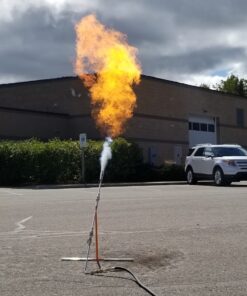
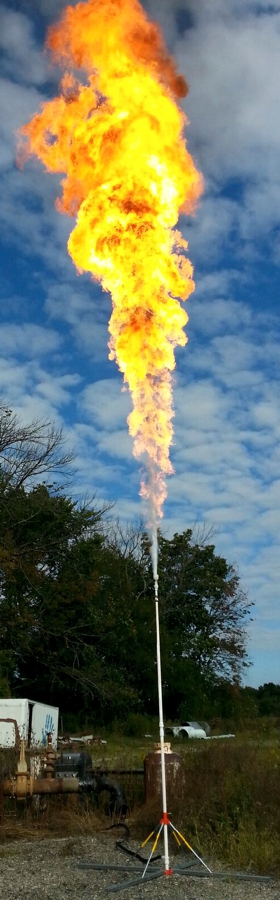
Flaring Propane 101 is a responder-focused resource covering the use of propane flares during emergency incidents, tank service situations, overfilled tanks, leaks, pressure management, and product removal.
This information explains why flare capacity matters, how excess flow valves can limit propane movement, and when responders may need to consider flaring vapor, liquid, or both depending on the incident. It also highlights the importance of understanding system limitations, tank conditions, temperature, pressure, and available tactical options before beginning a propane flaring operation.
The size and capacity of the flare matter because the flare must be able to match or exceed the system’s flow capability. A flare that is too small may not move product fast enough during a serious incident. However, the overall operation will still be limited by the tank, piping, valves, fittings, and system components in use.
Excess flow valves are safety devices designed to reduce propane flow when extreme flow rates occur. This can happen when a valve is opened too quickly or when system damage allows product to move faster than the valve is rated to handle. Once the product flow exceeds the rated capacity of the excess flow valve, the valve seats and limits flow. Responders must understand this limitation because even a large flare cannot move more propane than the system components will allow.
The guide also discusses Overfill Protection Device valves, commonly known as OPD valves, which are designed to help prevent propane cylinders from being filled beyond their permitted capacity. Type-1 connectors are available in different flow capacities, and those capacities can affect how much propane can move through the system. Understanding these components is important when evaluating what a flare can realistically accomplish during an incident.
One of the most important tactical questions during a propane emergency is whether responders need to create vapor space by flaring liquid or reduce internal pressure by flaring vapor. Flaring liquid can reduce tank volume more quickly and may be useful when a tank has been overfilled. Flaring vapor can help lower internal pressure by encouraging auto-refrigeration, which may be necessary before certain leaks or damaged fittings can be safely addressed.
Propane emergencies can involve many variables, including tank size, product volume, pressure, temperature, leak location, wind direction, system restrictions, ignition sources, and available equipment. Responders may need to evacuate the hazard area, monitor downwind and downgrade conditions, control vapors, cool the tank, shut off valves when safe, and request additional resources.
Flaring should be considered one tactical option within a larger response strategy. Proper training, practical exercises, and a clear understanding of propane behavior are essential before using flaring as part of an emergency operation.
Disclaimer: This document is not intended to teach all facets of dealing with a propane emergency, quality instruction and practical exercises must be included with every fire fighters regular training.
Learn how flare capacity, valve restrictions, system components, and flaring methods can affect propane emergency response decisions in the field.
Practical training and equipment information for responders.
Hands on training for propane emergency response scenarios.